
Fake news and it's impact on us!!

In this digital era, we regularly read the news to make ourselves aware of what's going on around us. 
No matter if we prefer social media platforms, news websites, or television channels all these are sources of information but are these platforms providing us only authentic and verified information?
source: news.psu.edu

I know you will agree with me on this not all the news spread on these platforms is true and authentic. 
Fake news is also spread by many platforms to attract a lot of viewers and attention.


Wherever I used the term fake news it only includes disinformation, not the misinformation. 

What is disinformation?
The information that is false and deliberately created to harm a person, social group, organization, or country.

What is misinformation?
The information is false but not created to cause harm.

Every day thousands of fake news spread through social media which manipulate our thinking and opinion.
source: Amazon.in

Mostly, the algorithm of these social media fails, in recognizing the authenticity of this news and when these get viral it influences the mind of thousands, lakhs of viewers.
source: forbes.com

Fake news leading to the poisonous atmosphere on the web and causing riots and lynching on the road.

In the last two years, we have been grappling in India with the terrible phenomenon called WhatsApp killings, over 33 people have died because they have been killed by mobs on the suspicion of being child kidnappers, over rumors spread on social media platforms like WhatsApp and Facebook.
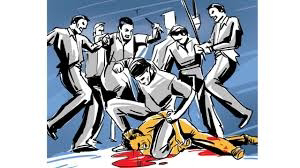
source: Dnaindia.com

India must be the only country where social media has led to rumors which have led to such brutal murders and killings.

According to a study by MIT, false news travels faster, deeper, and further than true news.

For example

1. A fake news in India is about 2000 rupees note. The news went viral over WhatsApp and social media sites that the 2000 rupees note came equipped with a chip that uses spying technology.

2. An example of communal tension between Hindus and Muslims in India can be seen when the Tablighi jamaat meeting was held in Delhi and it was said that they spread the covid virus in the whole of india. These types of fake and manipulative news destroy our inner conscience. 
source: orfonline.org

3. Political parties do it because they use it to sow seeds of distrust and prejudice ahead of elections, as we are seeing today.

4. Indians and the ‘Indian National Anthem’ being adjudged the best by UNESCO is still trending on many social sites, which is another fake news.


Steps were taken by India

1.Under the Indian Panel Code (IPC), people can be arrested for
posting fake news on the internet.

2. One can report Fake news to “Indian Broadcast Foundation” and “NBSA (News
Broadcasting Standards Authority)”.

3. If the news is defamatory then one can file a civil and criminal case for defamation.


What is our responsibility?

1. Find a trusted media organization.

2. Use Google image reverse for authenticity check

3. Teach children about the internet, how to use information carefully.

4. Check the authenticity of news before sharing.

5. Don't create opinions only by listening to one side of a story.


Sources - Youtube/tedxTalks
                  Youtube/StudyIQ
                  Groupdiscussionideas.com
                  

Comments

Popular posts from this blog

Tesla in India?

Recently, very exciting news has come that tesla is coming to India this year (2021). Tesla is one of the top and amazing electric car manufacturing companies in the world.   There are a lot of companies in the market that are making cars but Tesla is different because it is making future cars. Tesla cars have amazing features such as autopilot in which you just have to fill the destination in the system and cars will drive themselves. Tesla can achieve 0 to 100 kilometers per hour speed in just 3 seconds. It can pull the Boeing plane so you can imagine its power . Due to running on electricity, it's petrol, diesel expenses are zero. So it is eco-friendly as well as pocket-friendly. The cost of Tesla Model 3 in India is estimated to be 60 lakh due to 100% import duty because they are completely built up from outside and will be delivered here. But the government of India says that assemble cars in India and due to that job opportunities will increase an...

voting rights to illiterate-logical or not??

India's literacy rate is 74.4% according to the 2011 census, which contains 82.14% for males and 65.46% for females. Any Indian citizen who is 18yrs old and above has the right to vote and contest the election.13 Dec 1989 was the date when the starting age was reduced to18yrs from 21yrs. There is a constitutional body in India that handles the whole election procedure from the election of Prime Minister to Sarpanch. When India became independent thousands of questions arose in the minds of constitution-makers. One major question among all these was- Should illiterate people have the right to vote? We know that voting is a very big responsibility in a democracy. After a lot of debates and arguments, the decision was taken and voting right was also given to illiterate citizens. Arguments in favor  1. By not providing them the right to vote, we are violating their right to equality. 2. An illiterate voter can distinguish between genuine promises and false promises.  3...

Understanding Indian Society: A Sociological Perspective

India, a vast and diverse nation, is a fascinating mosaic of cultures, languages, religions, and social structures. To understand Indian society, one must delve into its historical roots, social stratification, and the interplay of tradition and modernity. With 40 years of experience in sociology, I aim to provide a comprehensive yet accessible overview of this complex society.  Historical Context Ancient and Medieval Periods Indian society has a rich history that dates back thousands of years. The ancient Indus Valley Civilization (c. 3300–1300 BCE) laid the foundation for many social and cultural norms. Following this, the Vedic period introduced the varna system, which later evolved into the caste system. The medieval period saw the rise of powerful empires like the Mauryas, Guptas, and Mughals. These empires contributed significantly to the cultural and social fabric of India. The Mughal era, in particular, saw a fusion of Persian culture with Indian traditions, leading to a vi...